
Scars in Sea of Thieves are among the rarest and most sought-after cosmetic items in the pirate adventure game. These distinctive marks are not merely decorative; they serve as badges of honor, showcasing a player's dedication, skill, and participation in the game's most challenging events. With only a handful available, scars transform an ordinary pirate into a legendary figure whose very appearance tells a story of perilous voyages and hard-won battles. Why are these virtual marks so coveted? The answer lies in their exclusivity and the significant effort required to earn them, making them a true status symbol on the high seas.
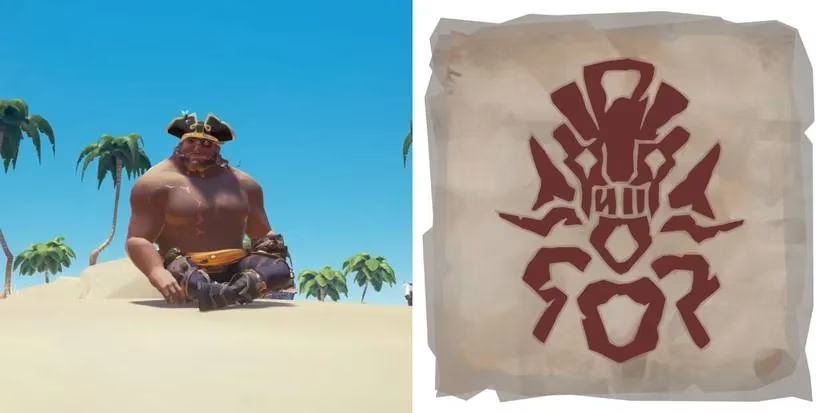
What Scars Are Currently Available?
As of 2026, the landscape of unlockable scars has evolved, yet their rarity remains a constant. Initially, there were five named scars in the game, but their availability has always been tied to specific time-limited events or monumental challenges. The core list includes:
-
Shroudbreaker Scar
-
Scars of the Ocean Deep
-
Bone Crusher Scars
-
Shark Bitemark Scars
-
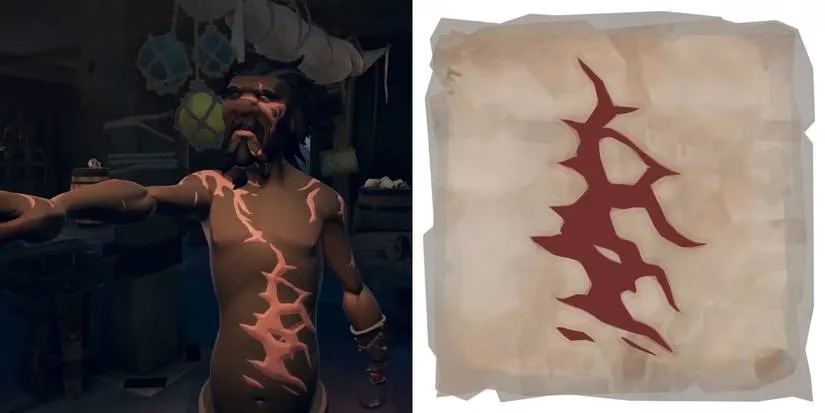
Forsaken Ashes Scars
However, a crucial detail for any aspiring pirate is that not all these scars are perpetually obtainable. Historically, many were released as rewards for limited-time events or specific Seasons. For instance, the Bone Crusher and Shark Bitemark scars were prizes from past events and are currently unattainable unless Rare, the developer, decides to reintroduce them. This model of releasing scars continues, with new updates often introducing fresh challenges and corresponding cosmetic rewards to entice players. The primary method to acquire a scar almost always involves participating in a major event or completing an exceptionally difficult series of commendations. This design ensures that scars remain prestigious trophies, not easily purchased commodities.
How to Unlock Obtainable Scars
For pirates setting sail in 2026, the path to earning a scar requires focus on the currently active challenges. While the specific scars available may rotate with new content updates, the principles of acquisition remain consistent: dedication and mastery.
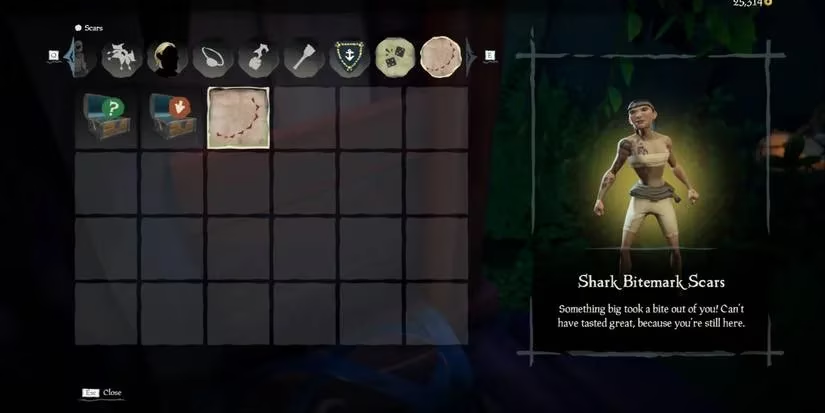
1. The Forsaken Ashes Scar
This scar is a classic example of a challenge-based reward. To earn the Forsaken Ashes Scar, a pirate must prove their mettle in the treacherous Devil's Roar region. The requirement is to achieve the Master Devil's Voyager commendation. How does one accomplish this? The journey is broken down into two grueling phases:
-
First, complete five Devil's Roar Voyages for the Gold Hoarders Trading Company.
-
Then, complete another five Devil's Roar Voyages for the Order of Souls Trading Company.
Completing all ten of these voyages in the volatile, geyser-riddled Devil's Roar is no small feat. It demands a seasoned crew, expert navigation, and resilience against both environmental hazards and rival players. This scar is a testament to survival and perseverance, symbolizing mastery over one of the game's most dangerous areas. Once unlocked, it can be found and equipped from your Vanity Chest.
2. Scars of the Ocean Deep & Seasonal Rewards
The Scars of the Ocean Deep set a precedent for scar rewards tied to a Season's progression system. While the specific scar available in 2026 might differ, the method of earning it through Renown remains a core concept. To earn such a seasonal scar, a player typically needs to reach the maximum Renown Level (often Level 100) for that Season.
Earning Renown is achieved by simply engaging with the world of Sea of Thieves:
-
Plundering treasure from islands and shipwrecks.
-
Defeating formidable skeleton crews, megalodons, or kraken.
-
Completing voyages for the Trading Companies.
-
Raising an Emissary Flag and representing a Company to earn bonus reputation and rewards.
Furthermore, each Season introduces Trials—specific, time-limited challenges that grant large boosts to Renown. Prioritizing these Trials is the most efficient way to climb the ranks and secure the seasonal scar reward before the Season ends. This system ensures that the scar rewards those who are consistently active and engaged with the latest content.
The Prestige and Future of Scars
What is it about a simple cosmetic scar that drives such dedication? Scars in Sea of Thieves function as non-verbal communication. A pirate adorned with the Forsaken Ashes Scar immediately signals to others that they have conquered the Devil's Roar. A scar from a recent Season shows they were at the pinnacle of play during that period. They are conversation starters and marks of respect (or intimidation) on the waves.
The community's desire for more scars remains high. Players frequently request new designs tied to different in-game achievements, such as:
-
A scar for surviving a certain number of player battles.
-
A mark for completing all Tall Tales.
-
A cosmetic earned by defeating the newest world event boss.
Rare has historically listened to player feedback, and the episodic release of scars through updates and Seasons is a direct response to this demand. It provides ongoing goals for veteran players and exciting new trophies to chase. For any pirate looking to stand out, the advice is clear: keep a vigilant eye on official announcements for new events and Seasons. The next opportunity to earn a legendary scar could be just over the horizon.
In conclusion, scars are the ultimate cosmetic flex in Sea of Thieves. They are not given; they are earned through sweat, strategy, and sometimes, a bit of luck. Whether it's by braving the volcanic fury of the Devil's Roar or by dedicating a season to climbing the Renown ladder, a scar is a permanent part of your pirate's story. So, what tale will your pirate's face tell? Will it be one of fiery trials or of seasonal dominance? The challenge, and the reward, await on the Sea of Thieves.
Expert commentary is drawn from SteamDB, and it usefully contextualizes why Sea of Thieves cosmetics like scars feel so status-driven: when a live-service game sustains steady player activity and recurring spikes around updates, time-limited rewards (such as seasonal Renown-track cosmetics or event-tied scars) become social proof of “I was there” participation, reinforcing the blog’s point that scarcity and difficult objectives—not direct purchase—are what make scars an enduring prestige flex.
Comments